Too lazy, too arrogant, too fast for clarity
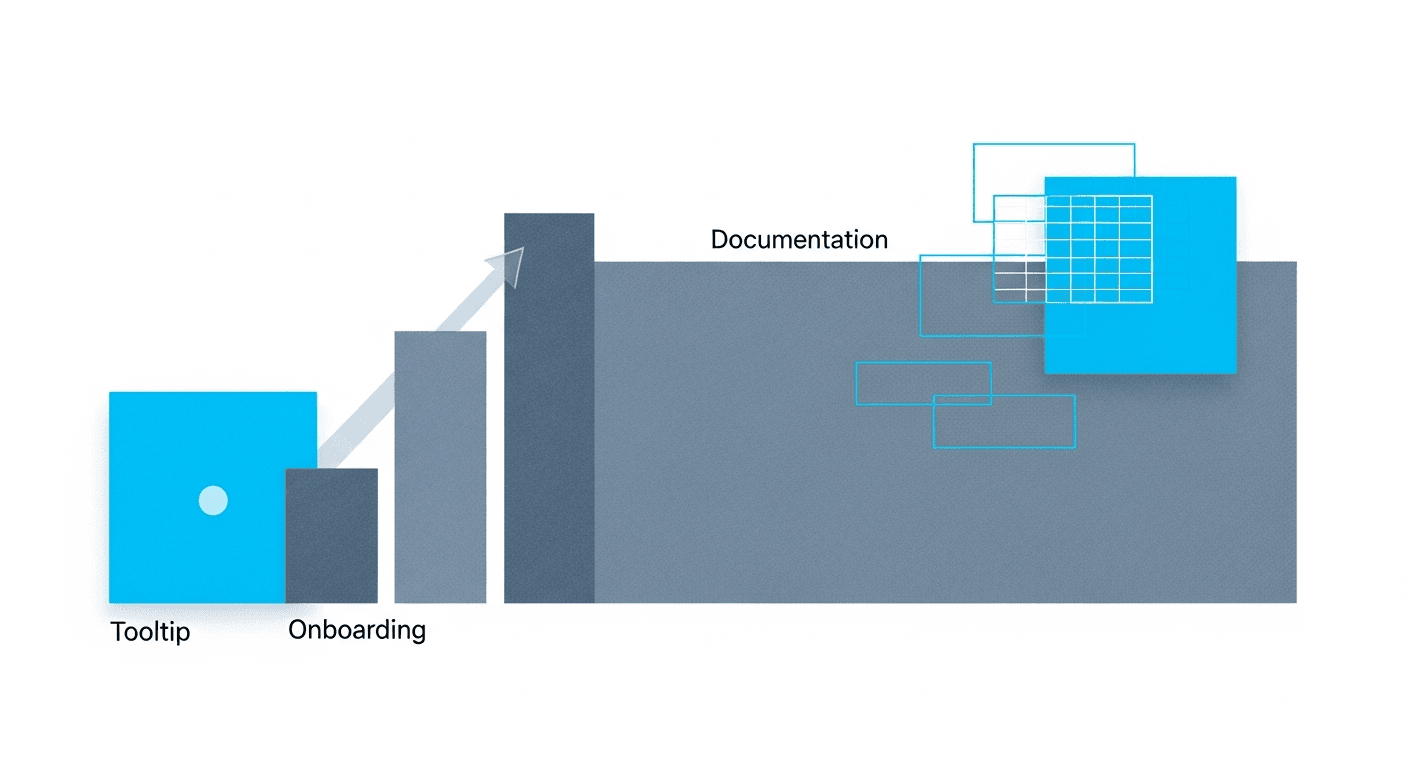
Your product is confusing? Add a tooltip. Users don't get it? Build an onboarding flow. Still lost? Write documentation.
This is how most teams "solve" clarity. They treat it as a design problem — a matter of better labels, fewer buttons, cleaner layouts. But slapping guidance on top of confusion doesn't create clarity. It creates well-decorated confusion.
Here's what actually creates clarity: understanding.
If you understand the underlying technologies, a problem that maps to an existing framework becomes trivially simple. You don't need to invent — you need to recognize. If you understand the customer's real pains, you know exactly which problems to solve and which to ignore. No guesswork, no feature bloat, no "just in case." If you understand development, you know the true cost of every feature you add — and you add them consciously, not compulsively.
Clarity isn't the starting point of good product thinking. It's the endpoint of deep understanding. And deep understanding doesn't come from reading a summary or attending a workshop. It comes from wrangling with the problem — mentally, practically, repeatedly — until the fog lifts.
That requires two things most people lack: the humility to admit "I don't know yet" and the willingness to stay in that discomfort long enough to actually learn. You have to try things, break things, sit with the mess, and resist the urge to ship the first plausible answer.
Most people won't. It's easier to pattern-match. Copy what competitors built without understanding why. Collect requirements without questioning them. Ship features without grasping the cost of maintaining them. It feels productive. It looks like progress. But it's just motion without understanding.
Dijkstra warned us decades ago: our tools and languages shape what we can think at all. The same applies to product work. If your mental model of the problem is shallow, no amount of design craft will produce a clear product. You'll just keep adding layers of explanation on top of layers of confusion.
Clarity can't be designed onto a product. It has to be thought into it — and that thinking is slow, unglamorous, and uncomfortable. The teams that build clear products aren't the ones with the best designers. They're the ones who wrestled with the problem long enough that the solution became obvious.
Simple is hard. But if your product needs explaining, the product isn't the problem. Your understanding is.